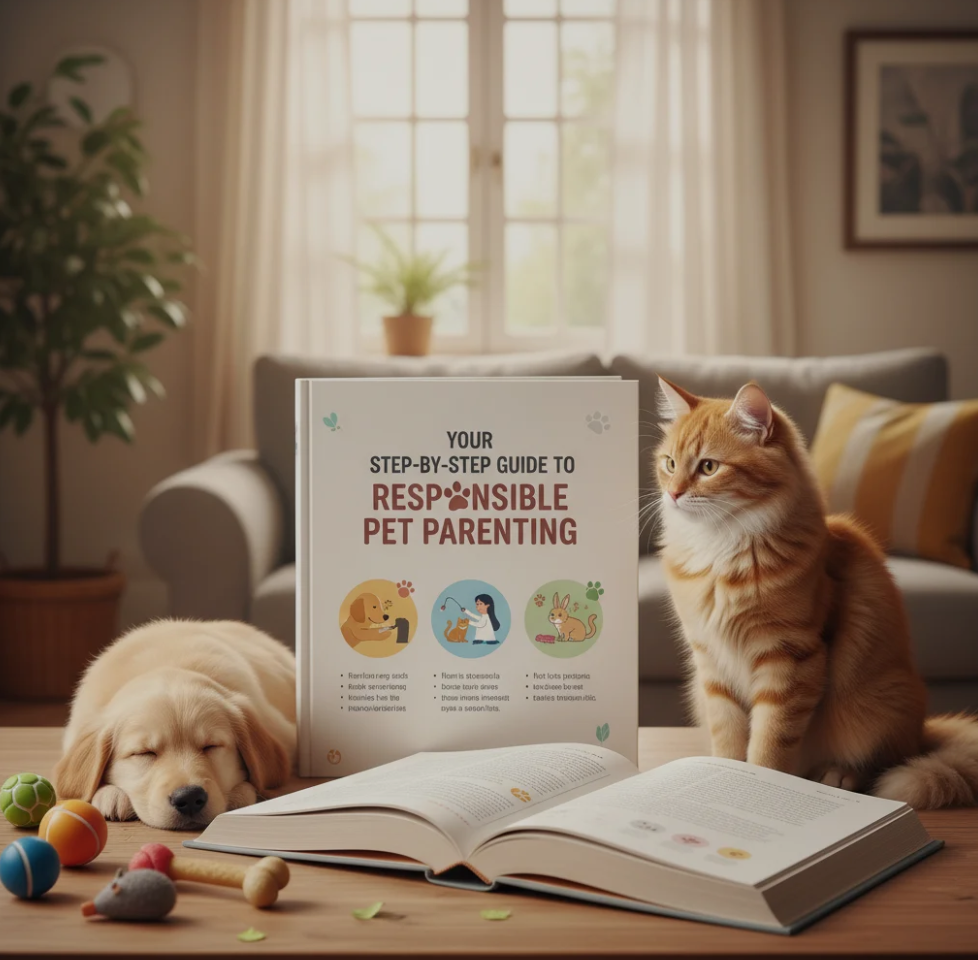
Welcoming a pet into your life is an exciting journey — but it comes with responsibility. Responsible pet parenting ensures your furry friend stays happy, healthy, and loved. This step-by-step guide will help you provide the care and attention every pet deserves.
1. Prepare Your Home
Before bringing a pet home, make sure your space is safe and comfortable:
- Remove hazards like toxic plants, exposed wires, or small objects.
- Set up designated feeding, sleeping, and play areas.
- Ensure access to clean water and proper ventilation.
A well-prepared environment helps pets feel secure and loved from day one.
2. Choose the Right Nutrition
Balanced nutrition is key to a healthy pet. Consider:
- Age-appropriate food for puppies, kittens, or senior pets.
- High-quality ingredients that meet dietary needs.
- Avoiding harmful human foods such as chocolate, onions, or caffeine.
Proper nutrition supports growth, energy, and overall wellness.
3. Prioritize Regular Health Care
Routine veterinary care keeps pets healthy and prevents diseases:
- Schedule vaccinations, annual checkups, and dental care.
- Keep up with flea, tick, and parasite prevention.
- Monitor for behavioral or physical changes that may indicate health issues.
Early detection is crucial for long-term wellbeing.
4. Training and Socialization
A well-trained pet is a happy pet:
- Teach basic commands and house rules consistently.
- Introduce your pet to people, animals, and new environments.
- Use positive reinforcement rather than punishment.
Socialization reduces anxiety and builds a stronger bond between you and your pet.
5. Provide Mental and Physical Stimulation
Pets need exercise and mental engagement to thrive:
- Daily walks, playtime, or interactive toys keep energy levels balanced.
- Puzzle feeders, training sessions, and games provide mental enrichment.
- Variety prevents boredom and destructive behavior.
6. Show Love and Emotional Care
Emotional wellbeing is just as important as physical health:
- Spend quality time cuddling, playing, or simply being present.
- Observe your pet’s mood and respond to their needs.
- Celebrate milestones and create a routine that fosters trust.
Remember: pets respond to love, attention, and consistency just as much as humans do.
Conclusion
Responsible pet parenting isn’t just about meeting basic needs — it’s about creating a fulfilling, safe, and loving environment. With preparation, care, training, and affection, your pet will thrive and become a cherished member of your family.
A happy, healthy pet is the reward for responsible and attentive care.